My research interests lie in cryptography, programming languages, and formal verification. In particular, my current work focuses on program analysis for finite field computations.
Recently, I have also been exploring questions in the history of Indian mathematics. In the past, I have worked on problems in discrete mathematics and computer architecture and systems.
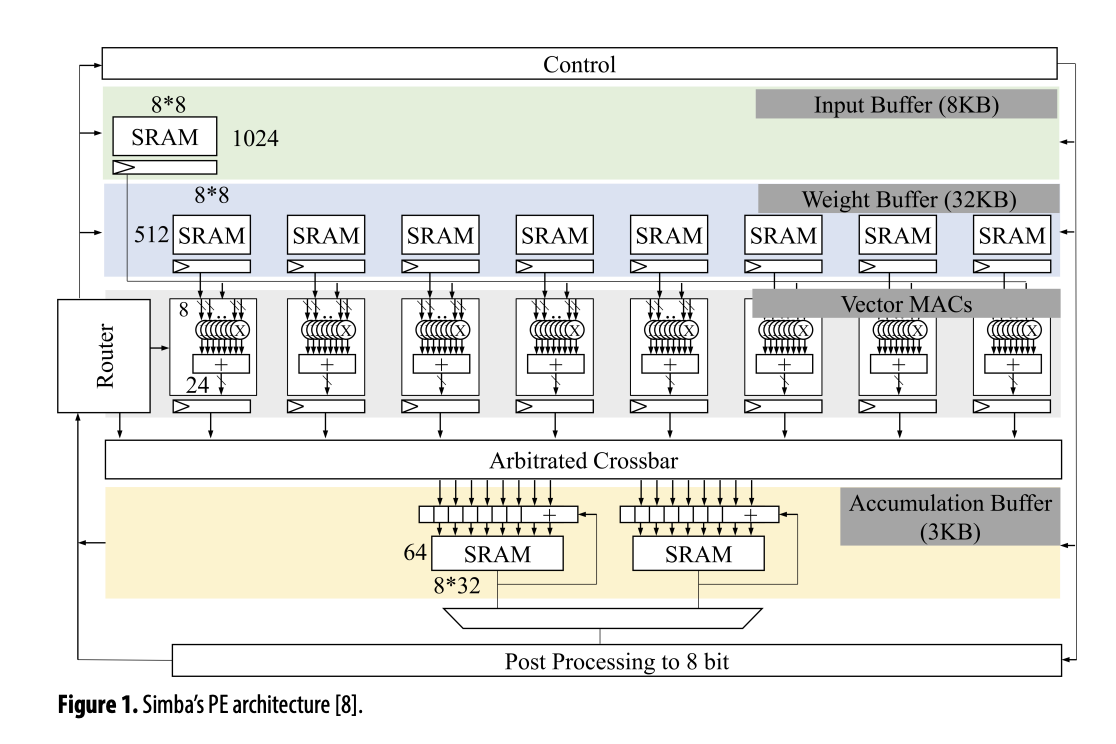
Modern language models like BERT have revolutionized natural language processing tasks but are computationally intensive, limiting their deployment on edge devices. This paper presents an energy-efficient accelerator design tailored for encoder-based language models, enabling their integration into mobile and edge computing environments. A dataflow-aware hardware accelerator design for language models inspired by SIMBA, use of Approximate Fixed-Point POSIT (AFPOS) based multipliers, and use of high bandwidth memory achieves significant improvements in computational efficiency, power consumption, area, and latency compared to the hardware-realized scalable accelerator Simba. Compared to SIMBA, AxLaM achieves 9x energy reduction, 58% area reduction and 1.2x improved latency, making it suitable for deployment in edge devices. The energy efficiency of AxLaN is 1.8 TOPS/W, 65% higher than FACT which needs pre-processing of language model before implementing it on the hardware.
On the Existence of Balanced Generalized de Bruijn Sequences
Matthew Baker, Bhumika Mittal, Haran Mouli, and 1 more author
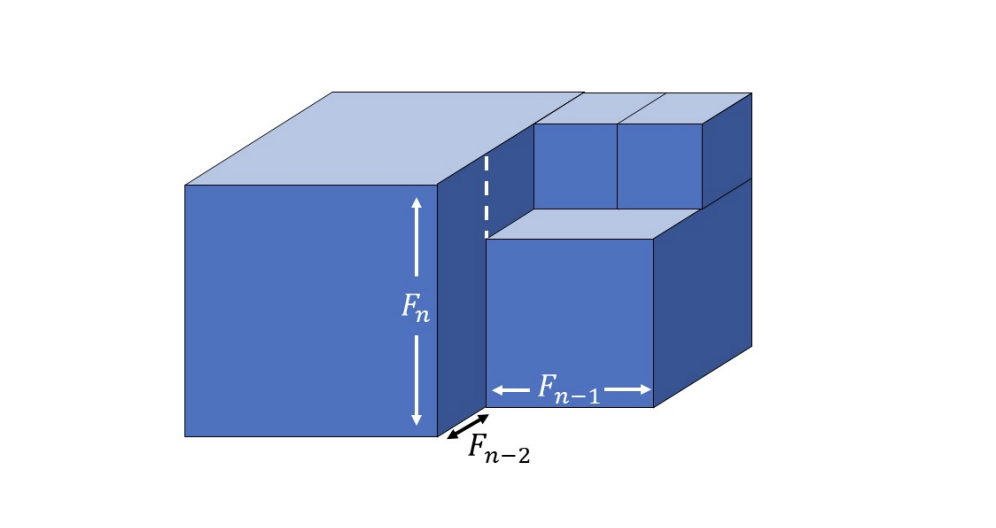
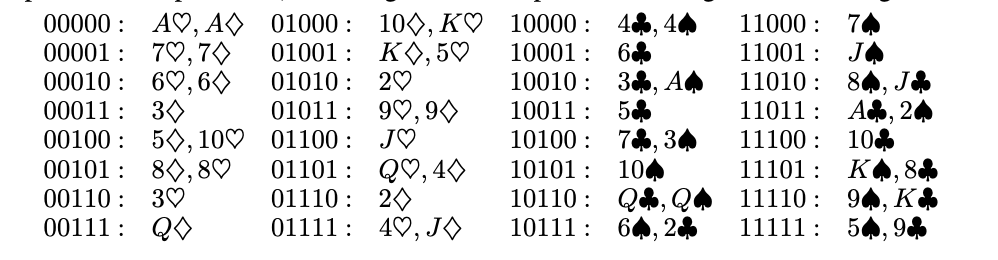
A balanced generalized de Bruijn sequence with parameters (n,l,k) is a cyclic sequence of n bits such that (a) the number of 0’s equals the number of 1’s, and (b) each substring of length l occurs at most k times. We determine necessary and sufficient conditions on n,l, and k for the existence of such a sequence.
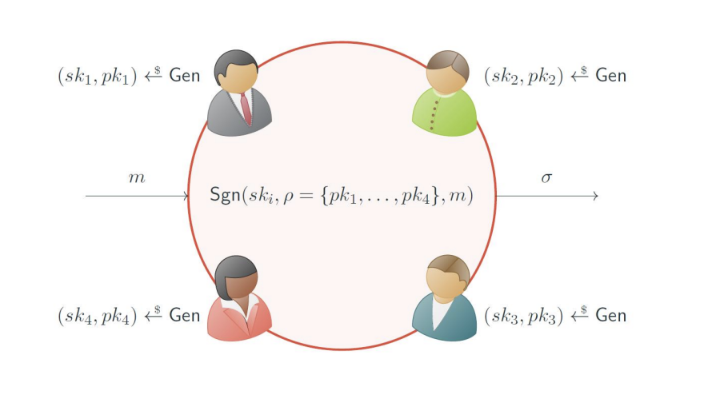
Ring Trapdoor Functions: A Lattice-Based Framework for Secure Ring Signatures
Modern language models like BERT have revolutionized natural language processing tasks but are computationally intensive, limiting their deployment on edge devices. This paper presents an energy-efficient accelerator design tailored for encoder-based language models, enabling their integration into mobile and edge computing environments. A dataflow-aware hardware accelerator design for language models inspired by SIMBA, use of Approximate Fixed-Point POSIT (AFPOS) based multipliers, and use of high bandwidth memory achieves significant improvements in computational efficiency, power consumption, area, and latency compared to the hardware-realized scalable accelerator Simba. Compared to SIMBA, AxLaM achieves 9x energy reduction, 58% area reduction and 1.2x improved latency, making it suitable for deployment in edge devices. The energy efficiency of AxLaN is 1.8 TOPS/W, 65% higher than FACT which needs pre-processing of language model before implementing it on the hardware.
On the Existence of Balanced Generalized de Bruijn Sequences
Matthew Baker, Bhumika Mittal, Haran Mouli, and 1 more author
A balanced generalized de Bruijn sequence with parameters (n,l,k) is a cyclic sequence of n bits such that (a) the number of 0’s equals the number of 1’s, and (b) each substring of length l occurs at most k times. We determine necessary and sufficient conditions on n,l, and k for the existence of such a sequence.
Ring Trapdoor Functions: A Lattice-Based Framework for Secure Ring Signatures
 AxLaM: Energy-Efficient Accelerator Design for Language Models for Edge ComputingIn Philosophical Transactions A, 2025
 On the Existence of Balanced Generalized de Bruijn SequencesIn Discrete Mathematics, 2023
 Ring Trapdoor Functions: A Lattice-Based Framework for Secure Ring SignaturesUndergraduate Thesis, Ashoka University, 2025